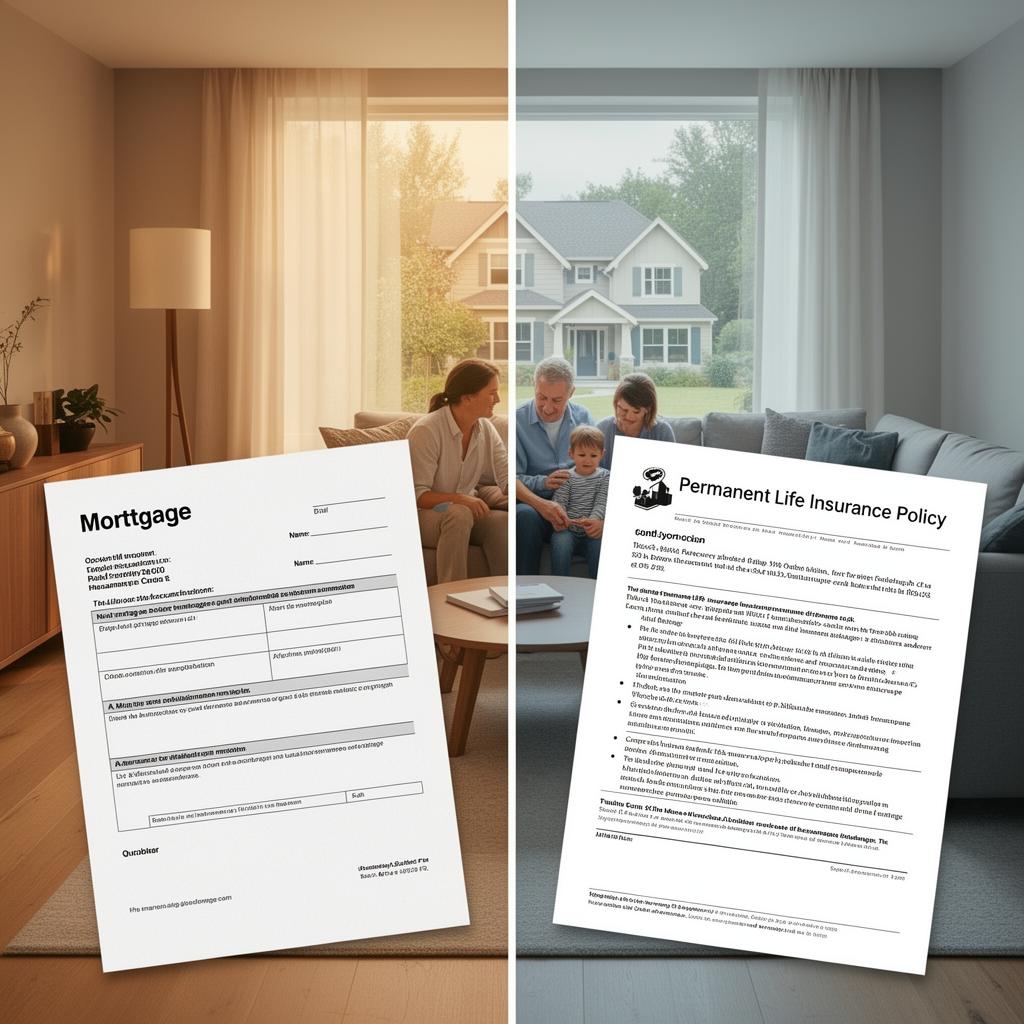
Key Takeaways
- Mortgage Protection Insurance (MPI) is designed specifically to help protect your mortgage if you die while coverage is active.
- Whole Life Insurance provides permanent coverage, a guaranteed death benefit, and a cash value accumulation component.
- MPI typically has lower premiums but no cash value. Whole life has higher premiums but includes tax-deferred growth.
- If your goal is simply protecting your mortgage, MPI may be sufficient. For broader financial protection, whole life may be better.
- Both policies can pay off a mortgage, but whole life provides more flexibility in how the death benefit is used.
If you're trying to protect your family and your home, you've probably come across two common options:
- Mortgage Protection Insurance (MPI)
- Whole Life Insurance
Both can provide a death benefit to your loved ones, but they work very differently.
Mortgage Protection Insurance is designed specifically to help protect your mortgage.
Whole Life Insurance is permanent life insurance that includes a cash value component and lifelong coverage.
So which one is better? The answer depends on your financial goals, budget, and how much flexibility you want from your insurance policy.
In this guide, we'll compare Mortgage Protection Insurance vs Whole Life Insurance, including costs, benefits, cash value, and who each option may be best for.
Mortgage Protection Insurance vs Whole Life: Quick Answer
If your primary goal is simply protecting your mortgage, Mortgage Protection Insurance may be sufficient.
If your goal is long-term financial protection, permanent coverage, and cash value accumulation, Whole Life Insurance may be a better fit.
The most important difference is:
- Mortgage Protection Insurance protects a specific debt.
- Whole Life Insurance protects your entire financial legacy.
What Is Mortgage Protection Insurance?
Mortgage Protection Insurance (MPI) is a type of life insurance designed to help pay off a mortgage if the insured dies while coverage is active.
The goal is to help surviving family members remain in the home without worrying about mortgage payments.
Depending on the policy:
- The mortgage may be paid off
- A death benefit may be paid to beneficiaries
- Coverage may decrease over time
Mortgage protection insurance is generally tied to a specific mortgage obligation.
What Is Whole Life Insurance?
Whole Life Insurance is a form of permanent life insurance.
Unlike mortgage protection insurance, whole life coverage does not expire after a set term as long as premiums are paid.
Whole life policies typically include:
- Lifetime coverage
- Guaranteed death benefit
- Cash value accumulation
- Tax-deferred growth
- Policy loan options
Many people use whole life insurance for:
- Estate planning
- Wealth transfer
- Business planning
- Long-term financial protection
MPI vs Whole Life Insurance: Side-By-Side Comparison
Here's a clear comparison to help you understand the differences at a glance:
| Feature | Mortgage Protection Insurance (MPI) | Whole Life Insurance |
|---|---|---|
| Primary Purpose | Protect mortgage | Lifetime financial protection |
| Coverage Duration | Usually tied to mortgage term | Lifetime coverage |
| Cash Value | No | Yes |
| Death Benefit | Yes | Yes |
| Policy Loans | No | Yes |
| Investment Component | No | Cash value accumulation |
| Premiums | Usually lower | Usually higher |
| Coverage Focus | Mortgage debt | Entire financial picture |
How The Death Benefits Differ
Both policies pay a death benefit, but the purpose of that benefit is different.
Mortgage Protection Insurance
The death benefit is generally intended to help:
- Pay off the mortgage
- Cover housing-related expenses
- Protect surviving family members from losing the home
Some policies feature decreasing benefits as the mortgage balance declines.
Whole Life Insurance
The death benefit remains in place throughout your lifetime.
Beneficiaries can use the money however they choose, including:
- Paying off the mortgage
- Replacing income
- Paying debts
- Covering funeral expenses
- Funding education
- Creating generational wealth
Whole life provides greater flexibility.
The Biggest Difference: Cash Value
One of the most significant differences between MPI vs Whole Life Insurance is cash value.
Mortgage Protection Insurance:
- No cash value.
- The policy is designed purely for protection.
Whole Life Insurance:
- Builds cash value over time.
- Part of your premium contributes to a cash value account that grows tax-deferred.
- This cash value may be accessed through policy loans, withdrawals, or surrenders depending on policy terms.
Which Option Costs Less?
In most cases, Mortgage Protection Insurance costs less.
Because whole life insurance includes lifetime coverage, cash value growth, and additional guarantees, premiums are typically much higher.
| Coverage Type | Approximate Monthly Cost |
|---|---|
| $250,000 Mortgage Protection Insurance | $40–$90 |
| $250,000 Whole Life Insurance | $200–$600+ |
Actual costs vary based on:
- Age
- Health
- Gender
- Tobacco use
- Coverage amount
Mortgage Protection Insurance Pros
- Lower monthly premiums
- Easier approval in many cases
- No medical exam options available
- Designed specifically for mortgage protection
- Simple structure
Mortgage Protection Insurance Cons
- No cash value
- Coverage may expire
- May have decreasing benefits
- Limited flexibility
Whole Life Insurance Pros
- Lifetime protection
- Guaranteed death benefit
- Cash value accumulation
- Tax advantages
- Policy loan access
- Estate planning benefits
Whole Life Insurance Cons
- Higher premiums
- More complex policy structure
- Slower early cash value growth
- Greater long-term commitment
Who Should Consider Mortgage Protection Insurance?
Mortgage protection insurance may be a good fit if:
- Your primary concern is protecting your mortgage
- You want affordable coverage
- You prefer a simple policy
- You recently purchased a home
- You need coverage quickly
Many first-time homebuyers fall into this category.
Who Should Consider Whole Life Insurance?
Whole life insurance may be a good fit if:
- You want lifelong coverage
- You want cash value accumulation
- You're focused on estate planning
- You want permanent financial protection
- You can comfortably afford higher premiums
Many individuals use whole life insurance as part of a broader financial strategy.
Can Whole Life Insurance Be Used For Mortgage Protection?
Yes.
Many homeowners use whole life insurance to protect their mortgage.
If the insured dies, beneficiaries can use the death benefit to:
- Pay off the mortgage
- Cover living expenses
- Pay other debts
This flexibility is one reason some homeowners prefer whole life insurance over mortgage-specific coverage.
MPI vs Whole Life: Which Is Better?
There isn't a universal answer.
Mortgage Protection Insurance may be better if:
- You want lower premiums.
- Your goal is protecting the mortgage.
- You need simple coverage.
Whole Life Insurance may be better if:
- You want permanent protection.
- You want cash value growth.
- You're focused on long-term wealth transfer.
The right choice depends on your financial objectives.
Common Misconceptions
Myth #1: Mortgage Protection Insurance Builds Cash Value
False. Most mortgage protection policies do not build cash value.
Myth #2: Whole Life Insurance Is Only For Wealthy People
False. Many middle-income families own whole life insurance.
Myth #3: Whole Life Insurance Must Be Used For Investments
False. Many people buy whole life primarily for permanent protection.
Myth #4: MPI And Whole Life Are The Same Thing
False. They serve different purposes and are structured differently.
Frequently Asked Questions
Is mortgage protection insurance the same as whole life insurance?
No. Mortgage protection insurance is designed around mortgage debt, while whole life insurance provides permanent coverage and cash value.
Which costs more, MPI or whole life insurance?
Whole life insurance is generally more expensive because it includes lifetime coverage and cash value accumulation.
Does mortgage protection insurance build cash value?
No. Most mortgage protection policies do not build cash value.
Can whole life insurance pay off a mortgage?
Yes. Beneficiaries may use the death benefit to pay off a mortgage or any other financial obligation.
Is whole life insurance worth it for homeowners?
It may be worth considering if you want permanent protection and cash value growth in addition to mortgage protection.
60-Second Quiz
Are you properly covered?
Take the free Homeowner Protection Quiz. Get personalized coverage options reviewed by a licensed agent — no spam, no pressure.
Free · Takes under a minute · Reviewed by a licensed agent